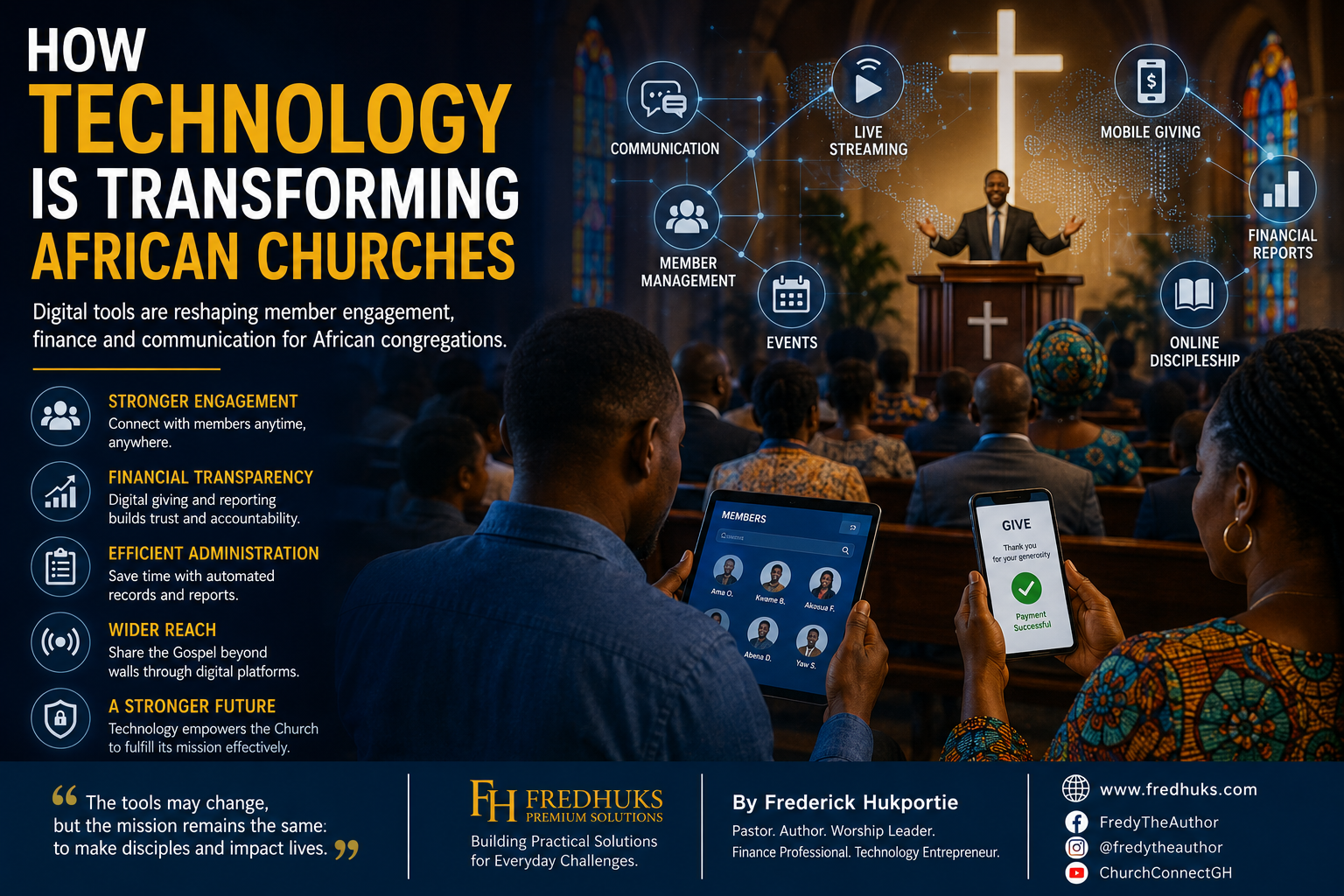
How Technology Is Transforming African Churches
From the Pulpit to the Platform: The Digital Revolution Reshaping Ministry
For generations, the African church has been one of the most influential institutions on the continent. Beyond preaching the Gospel, churches have served as centers of education, community development, leadership training, counseling, and social transformation.
However, while the message of the Church remains timeless, the world around it continues to evolve rapidly.
Today, technology is transforming nearly every aspect of life—from banking and education to healthcare and communication. The Church is no exception. Across Africa, digital tools are helping churches become more connected, efficient, accountable, and impactful than ever before.
The question is no longer whether churches should embrace technology. The real question is how churches can leverage technology to fulfill their mission more effectively.
The Digital Church Is Already Here
A decade ago, many churches relied heavily on paper records, manual attendance registers, physical announcements, and face-to-face communication. While these methods served their purpose, they often limited efficiency and made it difficult to maintain meaningful engagement with growing congregations.
Today, smartphones, mobile money, cloud computing, social media, and church management platforms have changed the landscape entirely.
Members now expect timely communication, online engagement, digital giving options, and access to church resources wherever they are. The churches that recognize and adapt to these changing expectations are discovering new opportunities to strengthen ministry and expand their reach.
Technology is no longer a luxury for churches—it is becoming an essential ministry tool.
Strengthening Member Engagement
One of the greatest challenges many churches face is maintaining meaningful relationships with members beyond Sunday services.
Technology has made it possible for churches to stay connected throughout the week through:
- Mobile applications
- WhatsApp groups
- SMS broadcasts
- Email newsletters
- Online devotionals
- Virtual prayer meetings
- Social media communities
These tools allow church leaders to communicate important updates, share spiritual content, coordinate ministry activities, and provide pastoral support in real time.
More importantly, they help transform church from a weekly gathering into a daily community.
Improving Financial Accountability
Financial stewardship is one of the most important responsibilities entrusted to church leadership.
Many churches still rely on manual accounting processes that can lead to delays, inaccuracies, and limited transparency.
Digital financial systems now allow churches to:
- Track offerings and donations
- Generate financial reports
- Monitor budgets
- Record expenditures
- Facilitate mobile money giving
- Improve accountability
As mobile payment adoption continues to grow across Africa, digital giving platforms are enabling members to contribute securely and conveniently, regardless of location.
When churches manage finances transparently, trust grows and ministry becomes more sustainable.
Simplifying Church Administration
Many pastors find themselves spending significant time on administrative responsibilities that could be automated.
Church management technology can help churches organize:
- Membership records
- Attendance tracking
- Volunteer management
- Small groups
- Event planning
- Follow-up systems
- Ministry reporting
Rather than spending hours searching through paper files and spreadsheets, leaders can access information instantly and make better-informed decisions.
This allows pastors and ministry teams to focus more on people and less on paperwork.
Extending Ministry Beyond Physical Walls
Technology has removed many of the geographical limitations that once restricted ministry.
Through live streaming, podcasts, social media, websites, and online discipleship platforms, churches can now minister to people far beyond their immediate communities.
A sermon preached in Accra can inspire someone in Kumasi, Nairobi, Johannesburg, London, or New York within minutes.
The Church's mission has not changed, but the tools available to accomplish that mission have expanded dramatically.
Technology is enabling churches to reach more people than ever before with the message of Christ.
Challenges Churches Must Address
Despite its many benefits, technology is not without challenges.
Churches must navigate issues such as:
- Digital literacy
- Data security
- Privacy concerns
- Budget constraints
- Resistance to change
Successful digital transformation requires more than purchasing software or creating social media accounts.
It requires vision, leadership, training, and a commitment to using technology in a way that supports ministry rather than distracts from it.
Technology should never replace genuine discipleship, prayer, fellowship, or pastoral care.
Instead, it should enhance and support them.
The Future of the African Church
The future belongs to churches that embrace innovation while remaining firmly rooted in biblical truth.
As congregations continue to grow and member expectations evolve, digital tools will play an increasingly important role in:
- Communication
- Administration
- Discipleship
- Financial stewardship
- Community building
- Evangelism
The churches that successfully combine spiritual leadership with technological innovation will be better positioned to serve their members, strengthen their ministries, and impact future generations.
The goal is not to become a digital church.
The goal is to become a more effective church in a digital world.
Final Thoughts
Technology is not changing the message of the Church. The Gospel remains the same.
What technology is changing is the way churches communicate, organize, engage, and serve.
For African churches, digital transformation presents an unprecedented opportunity to improve efficiency, deepen member engagement, strengthen accountability, and extend ministry beyond traditional boundaries.
The future of ministry will not be built on technology alone.
It will be built by leaders who understand how to use technology wisely in service of God's mission.